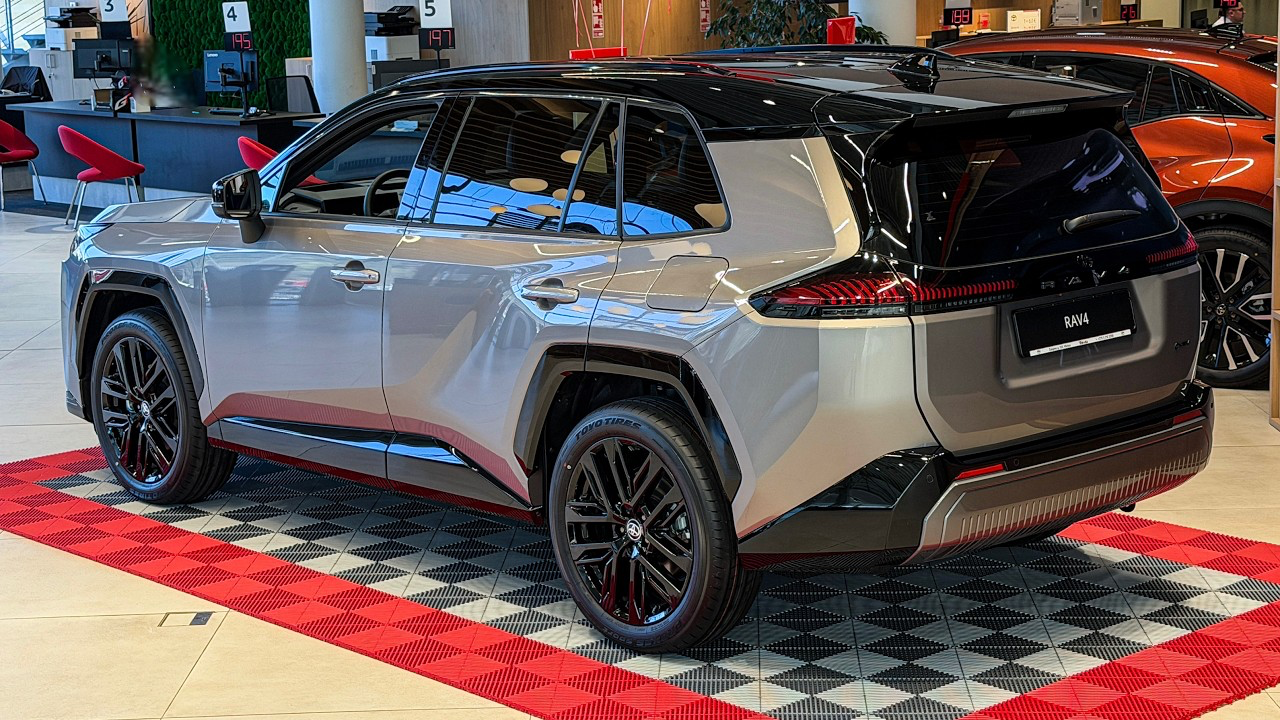
The Toyota RAV4 has never been the sort of SUV that needs to shout for attention. It has quietly built a reputation around being practical, dependable and easy to live with, which is probably why the name has become so familiar on British roads.
For 2026, though, Toyota has given the RAV4 a much bigger makeover than a simple mid-life update. This is the sixth-generation model, and the changes are noticeable from the moment you see it.
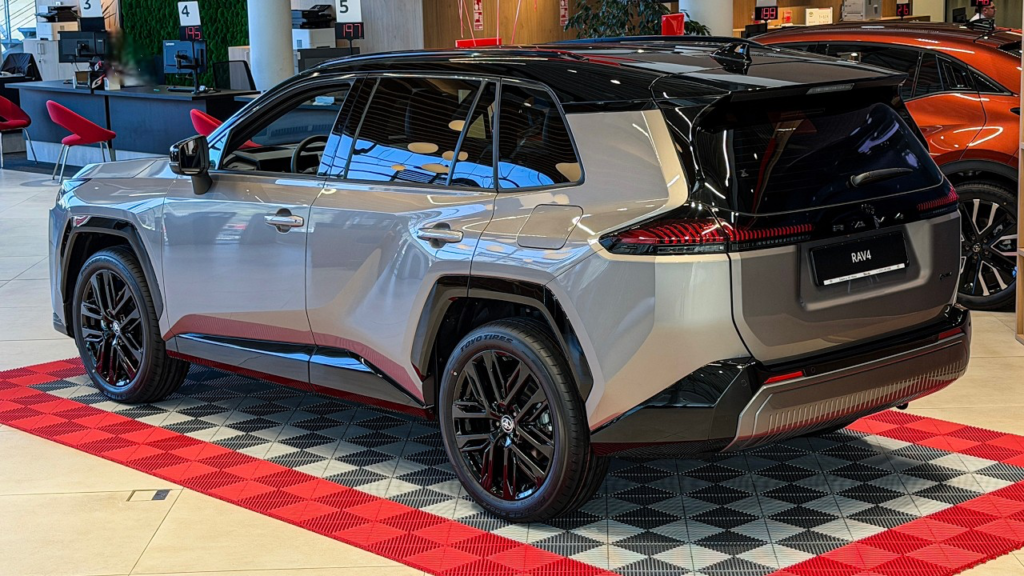
The styling is sharper, the cabin is more digital and, perhaps most importantly for UK buyers, the new RAV4 Plug-in Hybrid puts considerably more emphasis on electric driving. Toyota quotes up to 85 miles of electric range under the WLTP test cycle, while the range-topping versions can produce up to 309bhp.
So, is the new RAV4 actually worth considering when there are now so many hybrid and electric SUVs competing for the same buyers?
2026 Toyota RAV4 UK price
The new Toyota RAV4 starts at £43,845 on the road in the UK. That figure includes VAT, first-year Vehicle Excise Duty, delivery, number plates and registration, although optional extras such as special paint are not included.
That is not a small amount of money, particularly when you consider how competitive the family SUV market has become. However, Toyota is positioning the new RAV4 as a fairly well-equipped, technology-heavy plug-in hybrid rather than a basic petrol SUV.
There are several trim levels available, giving buyers a choice between keeping the price sensible and adding more equipment and a sportier appearance.
It is also worth keeping an eye on Toyota’s finance offers. At the time of writing, Toyota UK is advertising a 6.9% APR representative PCP offer with a £4,500 deposit contribution on the RAV4 Plug-in Hybrid for eligible customers, with the offer running from 1 July to 30 September 2026.
Of course, finance offers can change, so buyers should check the latest terms before making a decision.
A much more confident design
The old RAV4 was never an ugly car, but its design was arguably more functional than exciting. Toyota has taken a different approach with the 2026 model.
The new SUV looks broader and more purposeful, with a stronger front end, pronounced wheel arches and distinctive headlamps. Toyota describes the design as combining traditional SUV strength with a more contemporary appearance.
I think that is probably the right direction for the RAV4.
It still looks like a practical family SUV, but there is more personality to it now. It should also appeal to buyers who might previously have considered the RAV4 a little too conservative.
Toyota has clearly tried to make the different versions feel distinct as well. The GR Sport, for example, gets its own grille design, black alloy wheels and sportier exterior details.
What powers the 2026 RAV4?
This is where things get particularly interesting.
The UK model is offered as a plug-in hybrid, combining a 2.5-litre petrol engine with electric motors and a rechargeable battery. Depending on the version, buyers can choose between front-wheel drive and all-wheel drive.
The entry-level RAV4 Icon uses a 2.5-litre plug-in hybrid system producing 272bhp and is paired with front-wheel drive and an automatic transmission.
Higher-powered versions can produce up to 309bhp, while the fastest versions can reach 0-62mph in 6.1 seconds.
Those figures are quite impressive for what is, at heart, a family SUV.
The interesting thing about a plug-in hybrid is that you do not have to choose between electric driving and the convenience of a petrol engine. For shorter journeys, you can make much more use of the battery. For longer trips, the petrol engine provides the flexibility that some electric SUV buyers may still miss.
For a family that does school runs, shopping trips and commuting during the week but regularly heads across the country at weekends, that flexibility could be one of the RAV4’s biggest strengths.
Up to 85 miles of electric range
Electric range is probably the headline feature of the new RAV4 Plug-in Hybrid.
Toyota quotes an equivalent all-electric range of up to 85 miles, although the exact figure depends on the specification and conditions. The company’s own figures also make clear that WLTP results are intended for comparison and real-world range can vary depending on weather, driving style, vehicle load and other factors.
That distinction matters.
Nobody should buy a plug-in hybrid expecting to achieve the laboratory figure on every journey. Cold winter mornings, motorway speeds and heavy use of the heater can all affect electric range.
Even so, an official figure approaching 85 miles is significant for a PHEV.
For some drivers, that could cover most of their normal weekday driving without starting the petrol engine. If you can charge at home overnight, the RAV4 starts to make much more sense as an everyday car.
Toyota also offers smart charging features through its connected services, with the MyToyota app designed to help manage charging at home.
What is the interior like?
Inside, Toyota has brought the RAV4 properly into the modern digital era.
There is a 12.3-inch digital driver’s display and a large 12.9-inch multimedia screen on the dashboard. Toyota says the two displays are designed to work together, giving the driver access to information such as navigation, media and driving assistance without making everything feel cluttered.
The system also supports voice controls, while connected services are available through the MyToyota app.
But technology is only useful if it makes life easier.
That is something Toyota appears to have understood with the new RAV4. The cabin has not been designed simply to win a screen-size competition. The layout is intended to keep frequently used information easy to find, while steering-wheel controls allow the driver to change important functions without constantly reaching towards the centre display.
There are also wireless charging facilities and multiple USB charging points on selected specifications, which should be useful for families carrying several phones and tablets.
Space and practicality
This is still a RAV4, so practicality remains an important part of the package.
Toyota quotes boot capacity of up to 446 litres for the new Plug-in Hybrid.
That may not sound enormous when compared with some larger SUVs, but the RAV4 is aimed at buyers who want a manageable family car rather than a huge seven-seater.
For everyday use, the important question is whether it can handle the usual collection of shopping bags, pushchairs, luggage and weekend equipment without becoming frustrating.
The RAV4’s SUV body and five-seat layout should make it well suited to that sort of use.
It also retains the raised driving position that many buyers like about SUVs. You get a good view over surrounding traffic without moving into the size and bulk of a full-size four-wheel-drive vehicle.
Toyota RAV4 GR Sport
If the standard RAV4 looks a little too sensible for your taste, the GR Sport is the version to look at.
Toyota has given it a more aggressive appearance, including a distinctive black grille, sportier bumpers and 20-inch black alloy wheels. Inside, there are GR-specific touches, including sports seats, aluminium pedals and red detailing.
It is not pretending to be a hot hatch, of course.
The purpose of GR Sport is to give the RAV4 a more dynamic character without throwing away the comfort and practicality that make the SUV useful in the first place.
Toyota has also made some chassis changes. The GR Sport has a 20mm wider wheel track, high-performance dampers, strengthened rear bracing and revised springs and power steering.
That should make it feel more composed when driven enthusiastically, although buyers choosing a RAV4 are unlikely to be doing so primarily for track-day entertainment.
Safety and driver assistance
Safety has been one of Toyota’s strongest selling points for years, and the new RAV4 continues that approach.
The sixth-generation model introduces the latest generation of Toyota Safety Sense, supported by a new software platform called Arene. Toyota says the system brings faster responses and allows certain software improvements to be delivered through over-the-air updates.
One notable addition is Front Cross Traffic Alert, which is being introduced on the RAV4 as part of the newer safety technology package.
The car can also be equipped with features such as an advanced head-up display and parking assistance, depending on specification.
For a family SUV, this technology arguably matters more than having another few horsepower.
Most owners will spend their time commuting, taking children to school, travelling on motorways and parking in busy supermarket car parks. Driver assistance that reduces stress in those situations can be more valuable than outright performance.
Is the 2026 RAV4 expensive to run?
This is where the plug-in hybrid setup could work particularly well for the right owner.
If you have somewhere to charge the car at home and most of your journeys are relatively short, a large proportion of your driving could potentially be completed using electric power.
Toyota quotes a weighted combined fuel economy figure of up to 217.2mpg for the RAV4 Icon under the WLTP test procedure, with 30g/km of CO₂.
However, it is important not to take that number literally as the fuel economy you will see on every journey.
Plug-in hybrid fuel economy figures can vary dramatically depending on how often the battery is charged. Someone who plugs in regularly can make much greater use of the electric motor, while a driver who rarely charges may end up using the petrol engine much more often.
That is why the RAV4 PHEV makes the most sense for buyers who can actually take advantage of its electric capability.
Should you buy the 2026 Toyota RAV4?
There is a lot to like about the new RAV4, but it is not automatically the right choice for everyone.
The biggest question is whether you want a plug-in hybrid in the first place.
If you can charge at home and your daily journeys are relatively predictable, the ability to drive electrically for a large proportion of your routine trips is a genuine advantage.
If you spend most of your time on long motorway journeys and have little opportunity to charge, the argument becomes less convincing.
Then there is the price. Starting at £43,845 puts the RAV4 firmly into premium family-SUV territory.
That means buyers have plenty of alternatives to consider, including conventional hybrids, fully electric SUVs and other plug-in hybrid models.
Final verdict
The 2026 Toyota RAV4 feels like a much more ambitious car than its predecessor.
Toyota has kept the qualities that made the RAV4 popular—practicality, a comfortable SUV driving position and hybrid technology—while bringing the design, cabin and software up to date.
The plug-in hybrid system is arguably the biggest reason to pay attention. With up to 309bhp available and an official electric range of up to 85 miles, the new RAV4 is no longer simply a sensible family SUV with a hybrid badge.
For UK buyers who can charge at home, it could be a particularly compelling combination of electric commuting and petrol-powered long-distance freedom.
It is not cheap, and the benefits of a plug-in hybrid depend heavily on how you use the car. But if your lifestyle suits it, the new RAV4 makes a convincing case for itself.
In a market increasingly divided between traditional petrol cars and fully electric vehicles, Toyota is betting that there is still plenty of room in the middle. With the 2026 RAV4, that middle ground has become considerably more interesting.